Eastern Cougar
In the dense hardwood forests of eastern Canada, the Cougar prowls – or does it? Save endangered species today by joining one of our campaigns!
Help End the ExtinctionVital Signs
- Common name: Cougar
- Latin name: Puma concolor couguar
- Conservation Status: Data Deficient – not enough to give a specific status
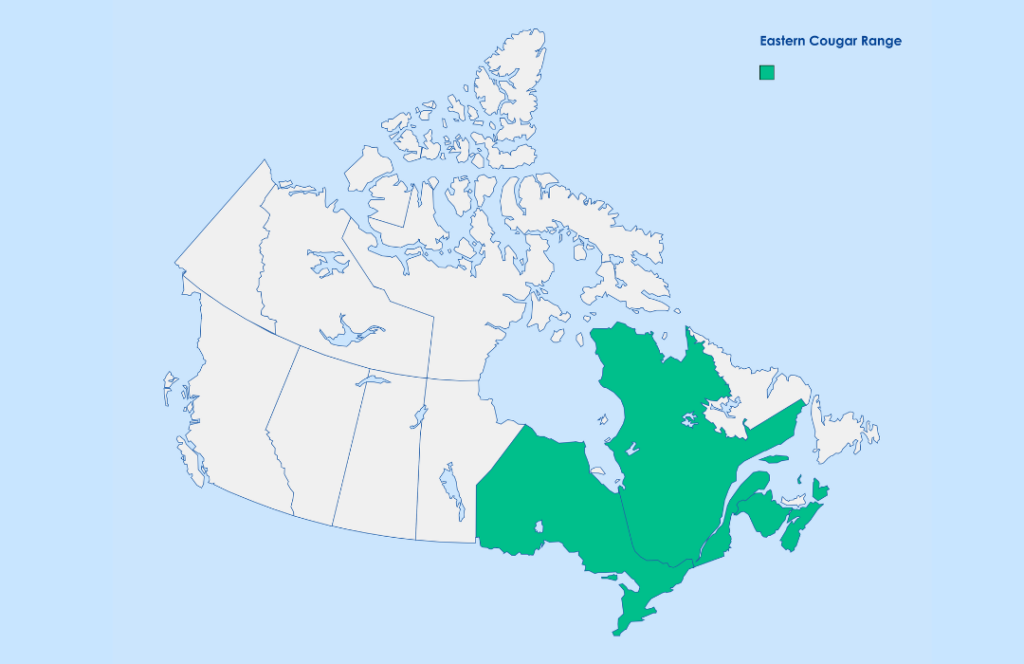
- Range: Ontario, Quebec, New Brunswick, Nova Scotia
- Lifespan: Unknown, but believed to be up to 21 years
- Size: Males can reach 2 metres in length, and females are slightly smaller. Male cougars can weigh up to one-and-a-half times more than females, and males can reach weights over 100 kg
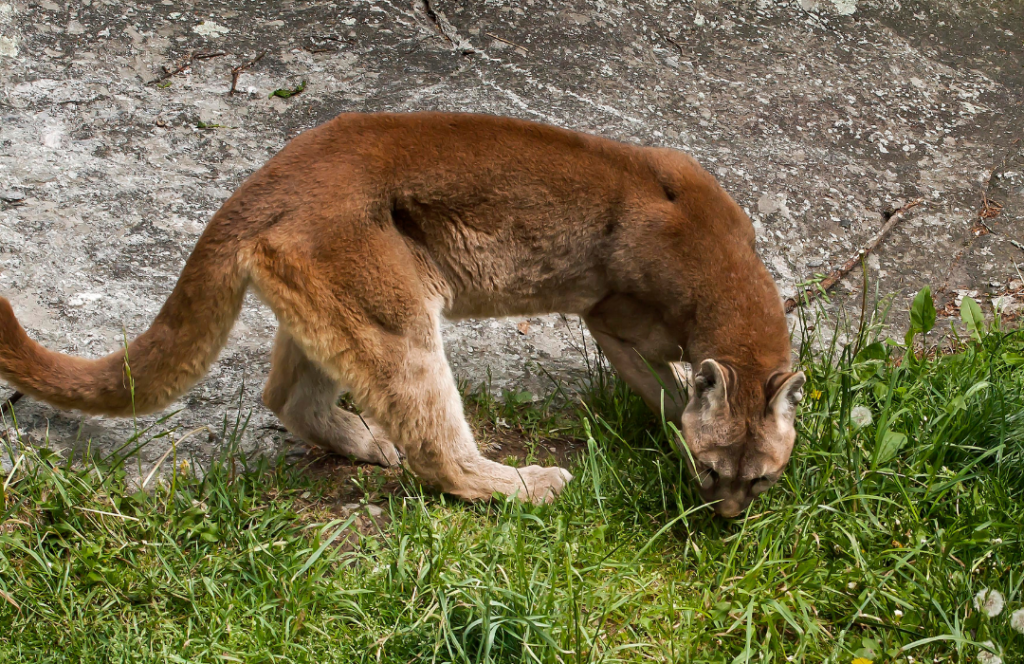
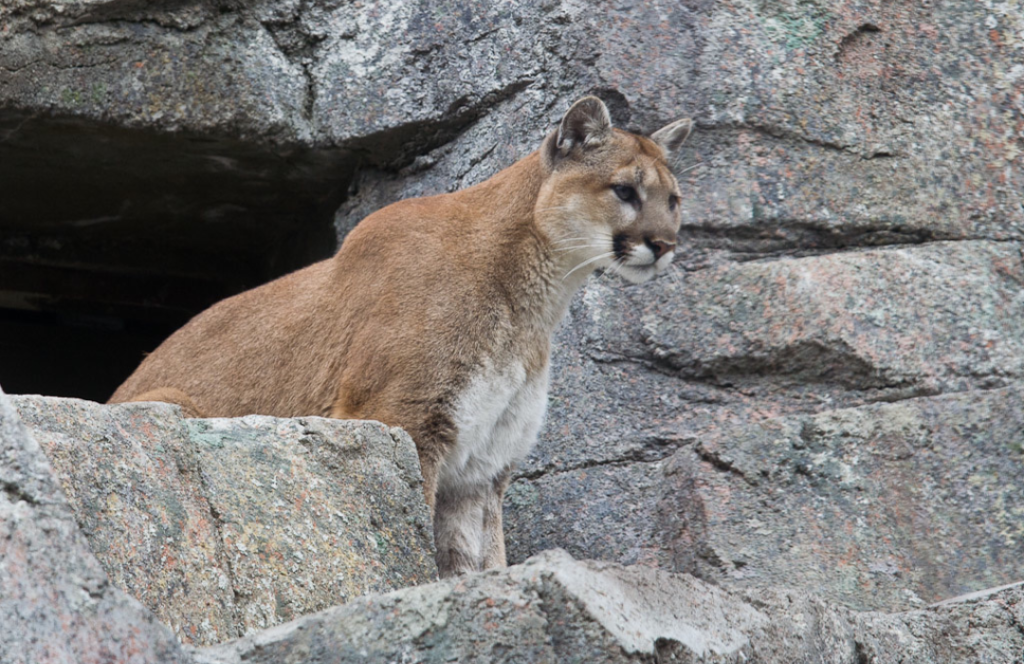
Cougar kittens have spots, but lose them before they turn one. Then they grow the adult coat of plain short hair, which can be reddish, grayish, dark brown, or tawny, with a white chest and belly. They have black markings on the backs of the ears and around the muzzle. An adult cougar’s tail has a black tip and can be up to one metre in length!
Eastern Cougar Facts
- Cubs stay with their mothers for up to two years to learn hunting techniques
- Usually hunt at night and rarely chase their prey. They slink forward slowly and silently, then pounce
- Are excellent swimmers and climbers. They can also jump more than six metres
- Diet is mostly deer, but they also eat beavers, coyotes, and other small mammals
- Will cover its prey with debris between feedings to hide it from scavengers
- Their range is thought to be the most extensive range of any terrestrial mammal in the western hemisphere
Threats
Cougars were once found all over North America. They still survive in Western Canada but no one knows how many, if any, Eastern Cougars remain. In the past, they were hunted by humans for killing livestock and as trophies. Logging in the eastern forests, human settlement, and habitat disturbance from activities like mining are responsible for the sharp drop in Cougar populations. These big cats need large areas of forest with no human activity to thrive.
What’s Being Done
Cougars are protected in Ontario. It is believed that as long as suitable habitat remains, Eastern Cougar populations may recover.
Canada has committed to the goal of protecting 30% of lands, ocean, and freshwater in Canada by 2030. This goal will help protect ecosystems, restore habitats, and fight climate change. All these things are a step in protecting Canada’s at-risk animals—so let’s hold the federal government to their promise.
How to Help
- Report Sightings: This can be to the Canadian Wildlife Service and/or your provincial Department of Wildlife.
- Learn: Stay informed on the Eastern Cougar and share your knowledge with others. You can also sign up for Nature Canada’s monthly e-newsletter.
- Be Eco-Conscious: Reduce your use of paper products, recycle paper and cardboard, and use recycled items whenever possible.
- Help Out: Be aware of and question local development plans that could destroy cougar habitats.
- Find out more: Help us end the extinction by taking action for nature today—visit conservation websites like Nature Canada or join one of our campaigns!
Resources
- Hinterland – Cougar
- Ontario – Cougar
- Species At Risk Public Registry – Cougar, Eastern Population